
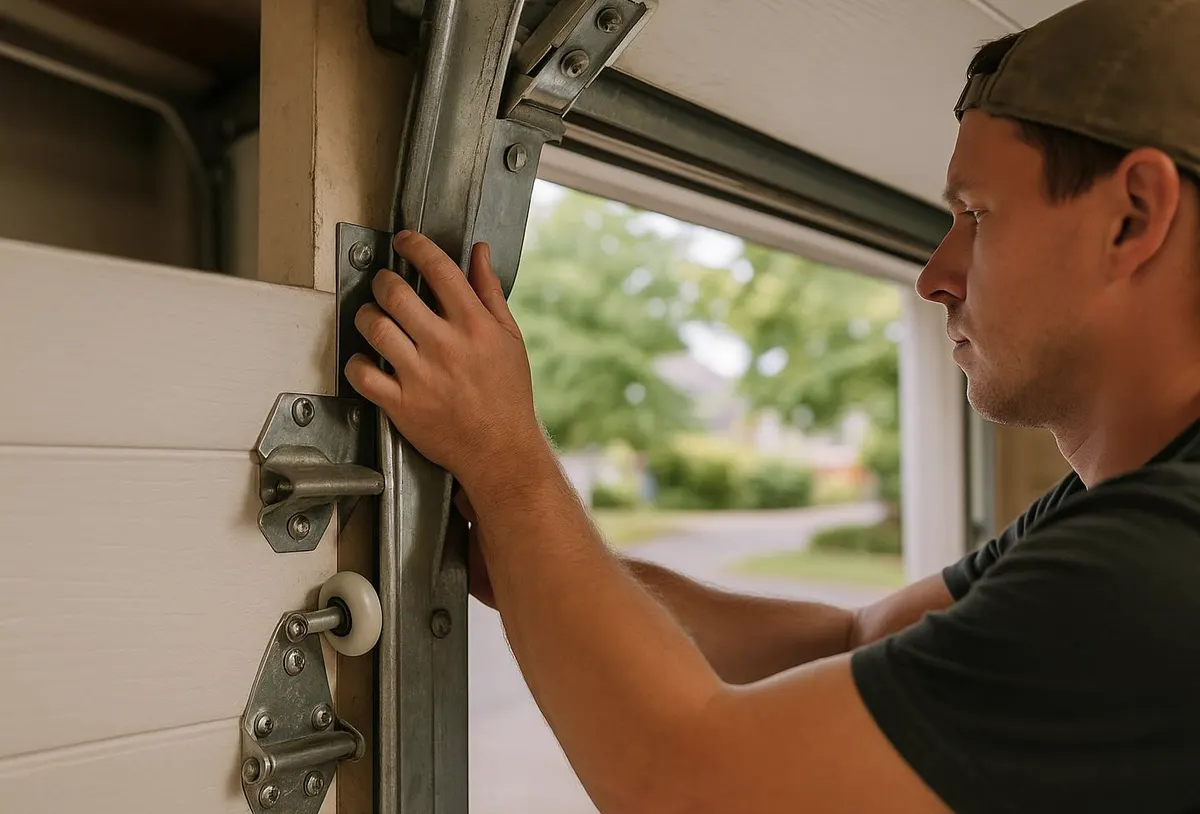
Here's the mistake almost everyone makes first: the door starts making noise, so someone grabs a can of spray lubricant, hits the hinges or the opener chain, and declares the problem solved. It's tempting because it's cheap, it takes two minutes, and the noise usually does quiet down for a week or two. The door still opens. The car still fits in the garage. Case closed, right?
Not quite. Lubricant can mask a symptom, but it doesn't fix a roller that's physically wearing out or a cable that's slowly fraying apart. Those are the quiet parts of your garage door system, and they're usually the real reason behind the loud bang, grind, or shimmy you're hearing.
What's Actually Making That Noise
Two components do most of the unglamorous work on a garage door: the rollers that guide the door along the track, and the cables that help lift and control it alongside the springs. Neither gets much attention until something goes wrong, and by then the wear has usually been building for a while.
Worn Rollers: The Wobble You Can See
Rollers are small, but they take a beating every single time the door moves. Over hundreds of cycles, nylon rollers develop flat spots or cracks, and steel rollers wear out their internal bearings. Here's what that looks like in real life:
- The door visibly shimmies or wobbles as it travels, instead of moving in a smooth, straight line.
- You hear a rhythmic clunk-clunk-clunk that matches the door's movement, not a one-time pop.
- The track itself rattles or vibrates, sometimes loose enough that you can wiggle it by hand.
- One side of the door seems to drag or hesitate compared to the other.
None of that is an emergency on its own, but worn rollers put extra strain on the track and the opener, and they tend to get worse, not better, with time.
Frayed Cables: The Fraying You Can't Ignore
Cables are a different story, and a more serious one. These are the wires that run alongside the springs, helping manage the tension that lifts your door. When they fray, you'll often see it before you hear it:
- Small broken strands sticking out near the bottom bracket or around the drum at the top of the track.
- Visible rust or discoloration on the cable itself.
- A popping or snapping sound as the door moves, which can mean a strand just gave way.
- The door sitting slightly crooked when closed, as if one side is lower than the other.
A frayed cable is under constant tension, and when it finally fails, it doesn't fail gently. The door can drop unevenly, jam in the track, or come down harder than it should on whatever's underneath it. This is the kind of wear that turns into a genuine hazard with very little warning.
Why Cold Winters and Salt Make This Worse
Garage doors in this part of Kentucky deal with a lot. Winter brings ice, road salt tracked in on tires, and sharp temperature swings that stiffen nylon rollers until they crack instead of flex. That same moisture and salt residue speeds up corrosion on steel cables and fittings, especially if your garage isn't perfectly sealed from the elements. Then summer humidity adds its own slow rust to anything that didn't get wiped down or lubricated going into the warmer months. The result is that rollers and cables here often wear out faster than they would in a milder, drier climate, which is exactly why a yearly once-over matters more in the Bluegrass region than it might elsewhere.
A Safe DIY Test You Can Actually Do
You don't need tools or expertise to get a decent read on where things stand. With the door closed, take a flashlight and look at the rollers and cables near the bottom corners of the door. Check for:
- Visible wobble when the door opens partway (have someone operate it while you watch from the side).
- Cracked, flattened, or chipped rollers.
- Any broken strands or rust along the cable, especially near the bottom bracket.
- A door that looks crooked or uneven when fully closed.
What you should not do is touch, adjust, or try to replace the cables yourself. They're under the same kind of tension as the springs, and handling them without the right tools and experience can lead to a serious injury.
When to Call Versailles Garage Door
If you're seeing wobble, hearing rhythmic clunking, or spotting any fraying or rust on a cable, it's time to call in a professional set of eyes. Versailles Garage Door handles exactly this kind of wear through both Garage Door Repair and Garage Door Maintenance visits. A technician will check roller condition across every panel, inspect cables and their connection points for fraying or corrosion, and look at how the door is tracking overall, catching problems while they're still a simple roller swap rather than a full cable and track repair.
If you've been hearing something off and you're tired of guessing who's right, settle it the easy way. Call Versailles Garage Door for a straightforward inspection, and get your door back to moving quietly and safely before winter weather puts any more strain on it.