
The One Rule That Keeps People Safe
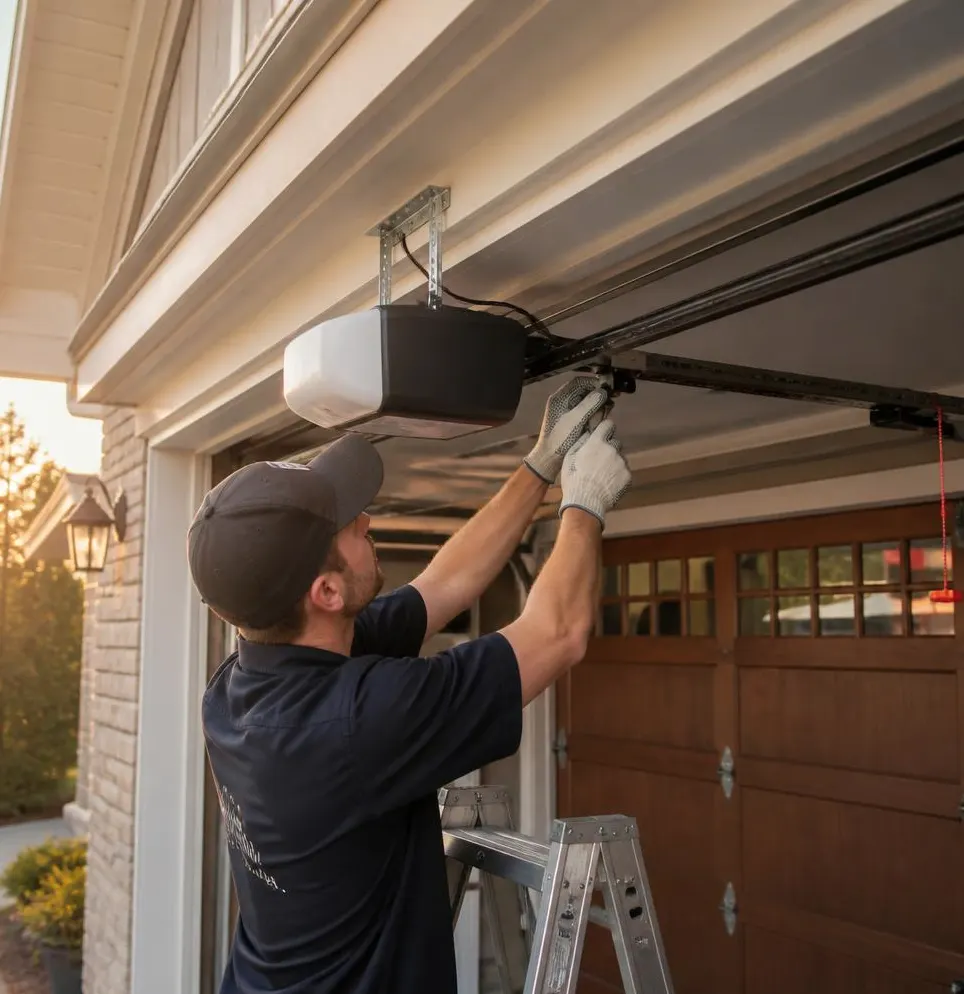
If a garage door spring is broken, sagging, or visibly stretched, the only tool you should touch is your phone. The one real exception is a trained technician with the right winding bars, tension gauge, and experience reading how a specific spring system is loaded — everyone else should stay clear of the spring itself, even if the rest of the repair looks simple.
What a Garage Door Spring Actually Does
Most residential doors use either torsion springs (mounted on a bar above the door) or extension springs (stretched along the horizontal tracks). Either way, that spring is doing almost all the work of lifting a door that can weigh well over a hundred pounds. The springs are wound or stretched under enormous tension so that a motor — or a person — only has to supply a small amount of extra force to move the door. That tension has to go somewhere when it's released.
What Goes Wrong When a Spring Fails
- Sudden snap: Years of cycling eventually fatigue the steel, and the spring can break without warning, often with a loud bang that homeowners mistake for a gunshot or a car backfiring.
- Gradual stretching: Extension springs can slowly lose tension, causing the door to feel heavier, hang crooked, or drop suddenly partway through opening.
- Uneven cables: A failing spring often takes the lift cables with it, letting one side of the door fall faster than the other.
- Opener strain: A garage door opener fighting a bad spring will work harder, burn out faster, and can even reverse unexpectedly.
How Badly It Can Go Wrong
A wound torsion spring stores enough energy to snap a winding bar out of someone's hands, send loose coils flying, or let a door — easily over a hundred pounds — drop in a fraction of a second. People attempting DIY spring work have ended up with crushed fingers, deep lacerations, broken bones, and eye injuries from flying metal. This is why garage door spring replacement is consistently named as one of the most dangerous common home repairs, right alongside roof work and electrical panel jobs. It isn't that the work is complicated to understand conceptually — it's that a small mistake releases a large amount of force instantly, with no second chance to back out.
Why Fall and Winter in the Bluegrass Make This Worse
Woodford County's seasonal swings are hard on garage door hardware. As temperatures drop through late fall and into winter, steel springs contract slightly and lose some flexibility, which means they're more prone to snapping on a cold morning than on a mild one. Road salt and slush tracked in on tires and boots also accelerate corrosion on cables, springs, and hardware over a winter season. Combine a spring that's already near the end of its life with a sudden cold snap, and that's often exactly when it finally gives out — usually at the least convenient moment, like when you're trying to get out the door before work.
What You Can Safely Do Yourself
None of this means homeowners should ignore their garage door and hope for the best. There's a lot you can safely check without ever touching a spring.
- Look, don't lift: Visually inspect the spring for gaps, rust, or visible stretching. If you see a gap in a torsion spring's coil, treat the door as out of service until it's repaired.
- Listen for changes: Grinding, popping, or a new rattle during operation is worth noting and mentioning to a technician.
- Keep hardware tight: Loose bolts on hinges, brackets, and the track can be snugged with a wrench — this is routine maintenance, not spring work.
- Lubricate moving parts: A garage-door-specific lubricant on hinges, rollers, and the track (not the springs themselves, unless the product says otherwise) helps parts move smoothly through winter cold and summer humidity alike.
- Clear the tracks: Debris, ice, or salt residue in the tracks can cause the door to bind and put extra strain on the whole lift system.
The Balance Test
This is the safest way to judge whether a spring is struggling, and it takes two minutes:
- Close the door and disconnect the opener by pulling the manual release cord.
- Lift the door by hand to about waist height.
- Let go. A properly balanced door with healthy springs should stay roughly in place. If it drops, that's a spring problem.
- Reconnect the opener and call for service — do not attempt to adjust or replace the spring yourself.
If at any point the door feels unusually heavy, won't stay up, or you hear a spring that sounds strained, stop and treat it as a repair issue, not a project.
When to Call Versailles Garage Door
If your door is making a loud bang, won't stay open during the balance test, or you can see a broken or stretched spring, that's the moment to call rather than troubleshoot further. Our spring replacement technicians carry the correct torsion bars, tension gauges, and springs sized to your door, and they handle the winding and unwinding process with the clamps and safety equipment that make it routine instead of risky. If the spring lets go on a weekend, before a trip, or in the middle of a cold snap and you're stuck with a door that won't budge, our emergency garage door service gets a technician out to get you moving again rather than leaving your car — or your household's whole morning — stuck behind a jammed door.
If you're in Versailles, KY or anywhere nearby in the Bluegrass — Lexington, Midway, Georgetown, Nicholasville, Frankfort, Lawrenceburg, or Wilmore — and you're hearing a spring that doesn't sound right, don't wait for it to fail completely. Call Versailles Garage Door today and let us handle the part of the job that actually belongs to a professional.